
2026-09-18 · Pete Jensen
How Spring Snowmelt Can Lead to Basement Water in Fargo
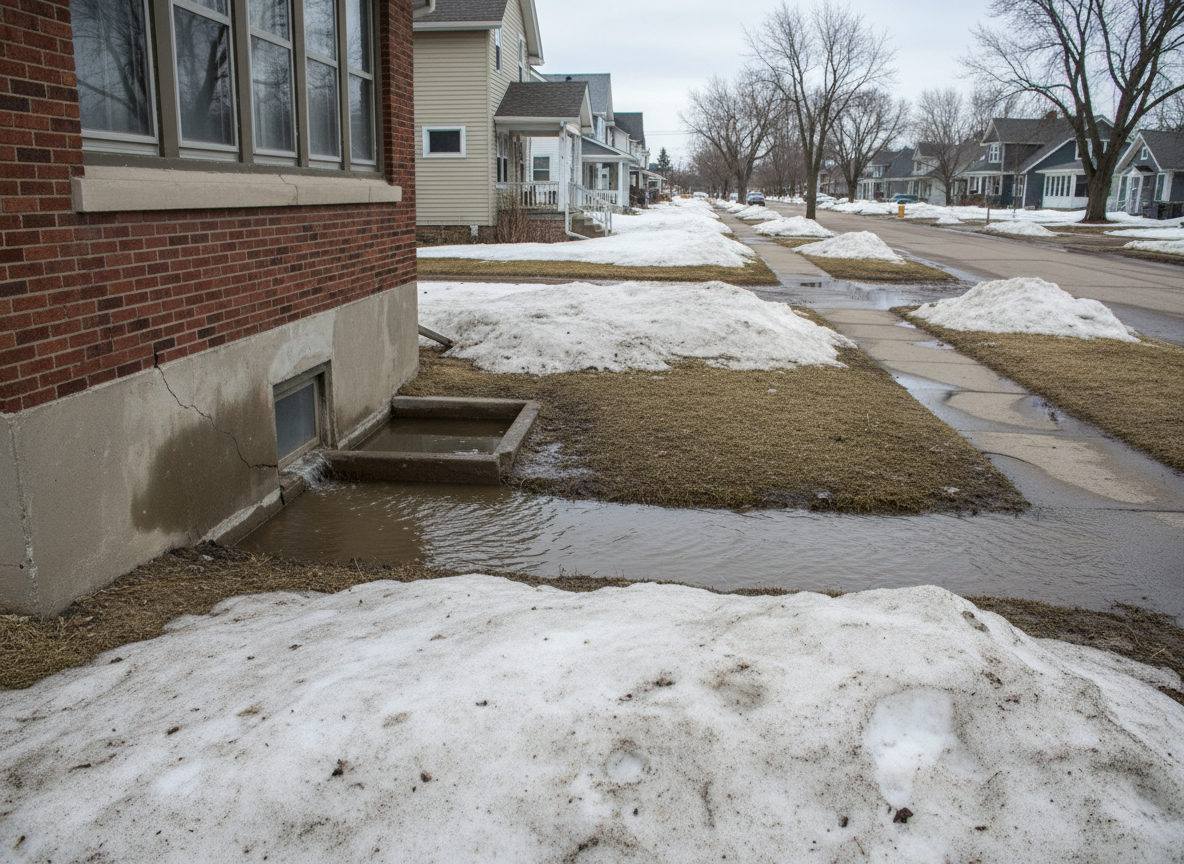
Spring snowmelt leads to basement water in Fargo when the 40–60 inches of winter snowpack melts faster than the frozen clay soils in Cass County can absorb it, sending runoff toward foundations in neighborhoods from Downtown Fargo to West Acres.
How Snow Accumulation and Thaw Patterns Affect Fargo Homes
Fargo winters often drop heavy snow that lingers into March and April, and when daytime highs reach the 40s while nights stay below freezing, meltwater pools on the surface instead of soaking in. This pattern repeats most years near the Red River and around the North Dakota State Capitol grounds, where flat terrain lets water travel long distances before finding a low spot. Homes built before 1970 in Hawthorne and Northport commonly sit on shallow foundations without modern perimeter drains, so the water pressure against basement walls rises quickly once the top foot of soil thaws. The same cycle hits Prairie Rose and Woodhaven when blizzards in January leave deep drifts that melt over just a few warm days in spring. Local operators see the first calls after any stretch of 50-degree days following a big snow event because the ground simply cannot handle the volume.
Why Frozen Ground and Clay Soils Direct Water Toward Basements
Cass County clay holds water near the surface once it thaws from the top down, creating a temporary perched water table that pushes against basement walls. In South Fargo and Island Park, older homes often have cracked or settled foundations from decades of freeze-thaw cycles, giving meltwater an easy path inside. The Red River valley’s low slope means water from surrounding fields and streets moves slowly, backing up against any obstruction like a driveway or sidewalk. When snowmelt coincides with a late-March rain, the combined load can overwhelm even intact foundation drains that were sized for lighter spring flows. Residents in North Fargo notice this first because many blocks there still rely on original 1950s-era clay tiles that clog with silt after repeated seasonal flooding.
Entry Points Common in Fargo Housing Stock
Basement windows set below grade in Hawthorne and Roosevelt/NDSU neighborhoods collect meltwater when downspouts empty too close to the foundation. Sump pits in homes built on the west side of town often fill faster than the pump can discharge because the discharge line freezes or the outlet sits in a low spot that stays saturated. Cracks at the floor-wall joint appear in many pre-1980 homes along River Drive because the original backfill settled unevenly. French drains installed in the 1990s around West Acres frequently lack cleanouts, so roots and sediment reduce capacity right when spring flow peaks. Checking the grading around the house after snow clears reveals whether water is being directed away or held against the wall for days.
How Sump Systems and Drainage Interact With Spring Melt
Many Fargo homes rely on sump pumps that were installed to handle typical spring rain rather than the concentrated runoff from a rapid snowmelt. When the pump runs continuously for 48–72 hours, older units can overheat or the float switch can stick, allowing water to rise above the pit. Homes near the Fargodome and Plains Art Museum often share storm lines that surcharge during peak melt, sending water back through floor drains. Linking a battery backup or upgrading the discharge line to a frost-free location helps, yet many systems still need manual checks during the first warm week of April. Snowmelt Basement Cleanup addresses the water once it enters, while Why Fargo Basements Flood After Heavy Rain and Sump Pump Problems explains pump sizing in more detail for homeowners planning upgrades.
Practical Steps Homeowners Take Before and During Thaw
Clear snow from the foundation perimeter by at least three feet once daytime temperatures stay above freezing to reduce the volume of meltwater sitting against the wall. Extend downspouts so water lands at least six feet from the house, especially on the north side where shade keeps the ground frozen longer. Test the sump pump in late February by pouring water into the pit and confirming it cycles properly before the first thaw. Keep floor drains clear of debris so any water that does enter can reach the sump rather than ponding on the slab. When water appears despite these steps, What to Do When You Find Water in Your Basement in Fargo outlines the immediate drying sequence that prevents mold in the cool spring air.
When Professional Assessment Becomes Necessary
If water reaches more than two inches across the floor or enters finished areas, extraction and drying equipment sized for the space becomes necessary to avoid long-term damage to drywall and flooring. Homes in Clara Barton and Horace Mann with finished basements often need targeted drying of lower wall sections because capillary action pulls moisture upward even after the visible water is gone. What Gets Wet in a Finished Basement and What Needs Drying? details which materials must be removed versus dried in place. Fargo Basement Recovery operates from 1706 Main Ave, Fargo, ND 58103, Monday through Friday 8am–6pm and Saturday 9am–2pm to respond during the narrow window when melt is actively occurring.