
2026-09-18 · Pete Jensen
Why Fargo Basements Flood After Heavy Rain and Sump Pump Problems
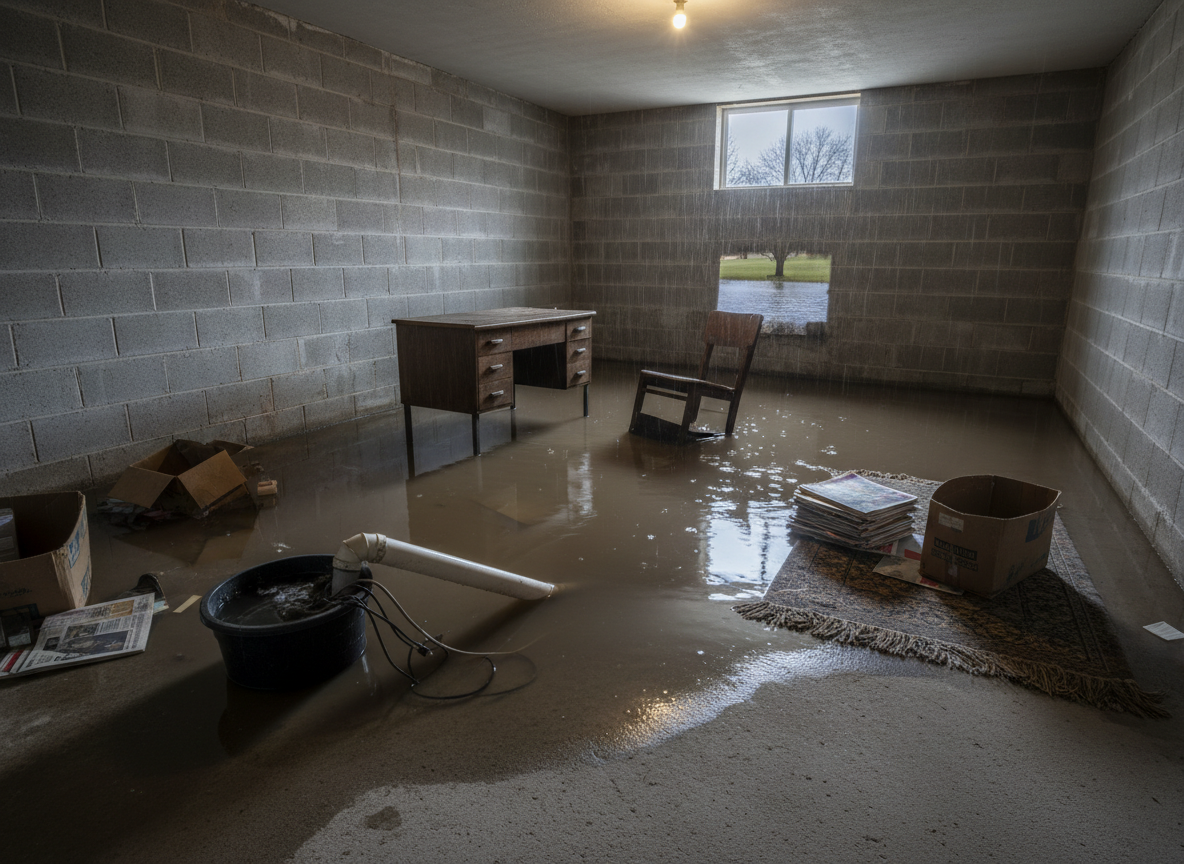
Fargo basements flood after heavy rain primarily because sump pumps cannot discharge water fast enough when severe thunderstorms saturate clay-heavy soils around the Red River, causing groundwater to push through foundation cracks in neighborhoods such as Hawthorne, North Fargo, and Downtown Fargo.
How Severe Thunderstorms Affect Cass County Drainage
Cass County sees frequent severe thunderstorms in summer that drop 2–4 inches of rain in hours, overwhelming storm sewers built for lighter flows. In areas like Island Park and West Acres, flat terrain and high water tables let runoff pool against foundations instead of draining toward the Red River. Older homes in these spots often have clay soils that hold moisture, raising hydrostatic pressure on basement walls. When rain exceeds 1 inch per hour, water finds entry points at joints and cracks before pumps can respond. This pattern repeats during warm-season storms that follow spring snowmelt, leaving soil already saturated.
Why Sump Pumps Fail During Peak Rain Events
Sump pumps in Fargo typically last 8–12 years before float switches corrode or motors burn out from continuous run times. During heavy rain, pumps must cycle every 30–60 seconds to handle inflow, and many units sized for 2,000–3,000 gallons per hour cannot keep up when multiple inches fall quickly. Power outages common with thunderstorms leave systems without backup batteries or generators. In Northport and Prairie Rose, homes with older 1/3-horsepower pumps see water rise above the pit when discharge lines freeze or clog with debris. Regular testing in spring reveals these limits before summer storms arrive.
Housing Stock and Foundation Conditions in Fargo Neighborhoods
Many homes in Hawthorne, Woodhaven, and near the North Dakota State Capitol grounds were built before 1970 with concrete block or poured foundations that develop hairline cracks over decades. These older structures sit on glacial till that expands when wet, widening gaps for water entry. Newer builds in South Fargo still face issues if grading slopes toward the house or if French drains were never installed. When heavy rain hits, water follows the path of least resistance into basements rather than away from the structure. Checking grading and adding exterior extensions to downspouts reduces this pressure before it reaches the sump.
How to Respond and Prevent Recurring Flooding
After water appears, document levels and contact professionals for heavy rain basement cleanup to limit mold growth in finished spaces. For pump-related issues, review sump pump failure basement cleanup options that include temporary high-capacity units. Homeowners in Roosevelt/NDSU or River Drive can also read what to do when you find water in your basement in Fargo for step-by-step guidance. Checking pump operation monthly and installing battery backups cuts risk during the next thunderstorm. Addressing these factors together keeps basements dry even when Cass County weather turns extreme.